
Clean Below? Good to Go launches its ‘all eyes on the water' campaign
by Zoe Hawkins 5 Nov 2025 14:21 NZDT
5 November 2025
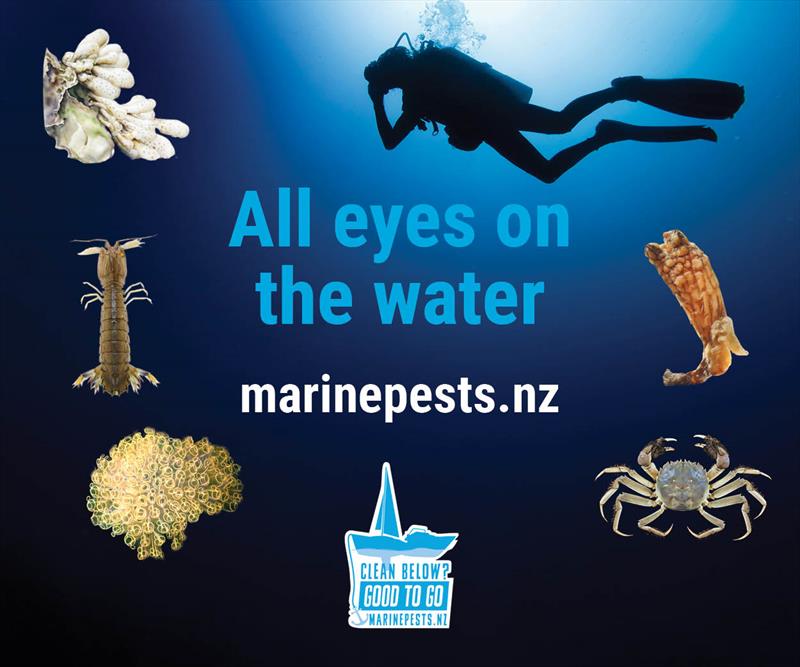
Boaties need to be aware of the marine pests in NZ waters and report any sighting © Marine Biosecurity
New Zealand's sailing fleet is in a great position to find and report marine pests this summer, as Clean Below? Good to Go launches its 'all eyes on the water' campaign to help boat owners and ocean lovers understand what marine pests look like, and what to do if they find something suspicious.
1. Get familiar with the pest species
Know what the pest species look like and how to tell them apart from beneficial native species. There are more than 200 non-indigenous marine species known to be in New Zealand but only about ten of them are considered harmful - so those are the ones to focus on.
- Join a free Marine Pest ID webinar, 10-11am on Thursday 20 November - register here
- Check out the marinepests.nz marine pest ID guide for a list of pests known to be in New Zealand and where they are located
- Or delve deeper and learn more details about these plus 11 marine species that we don't want in New Zealand on the Marine Biosecurity Porthole
2. Know how to report a pest if you find something suspect
Romany Prevette-Stanaway of Bay of Plenty Regional Council encourages divers to make a report even if they aren't 100% sure it's a pest. "No one wants to be the person that is wrong," says Romany Prevette-Stanaway of Bay of Plenty Regional Council. "But we'd rather get 1000 false alarms than miss the one that is right".
"If you find something suspicious, take a photo and report the exact location at report.mpi.govt.nz or by calling 0800 80 99 66 and let your local council know".
3. Stop the spread
Hull grooming is the great buzzword for boats that live in the water all the time, says Senior Regional marine biosecurity advisor Sam Happy of Auckland Council. "This means regular checking and grooming of your hull to prevent excessive growth - along with regular antifouling is right for your boat and use, and when you're cleaning make sure to give special attention is given to props and niche areas. Too often boats are turning up at places with a couple of pests hiding away from not being cleaned and antifouled properly, and that is all it takes to cause an incursion".
While most regions have slightly different rules relating to biofouling, and she says that ensuring your boat's hull has no more than a light layer of slime, means you'll be good to go wherever you are headed.
Some pests, including exotic caulerpa and Asian paddle crab, can spread as small fragments on in-water gear and equipment including dive and fishing gear. So make a habit of checking your anchor, chain and gear for any pests before moving locations and following the guidelines and rules for exotic caulerpa. If you head to freshwater, the same applies to checking and cleaning before moving your boat around.
"If you are visiting anywhere that exotic caulerpa has been found, or close to where it has been found, please do some research before you go to ensure you are familiar with the locations, what to do if you find it, and the legal restrictions including places where you can't anchor or disturb the seafloor."
You can find out everything you need to know about exotic caulerpa in New Zealand on the Biosecurity NZ website
Find out about the marine pest rules and get more tips and information by visiting www.marinepests.nz/rules