Please select your home edition
Edition
Clean Below - All Eyes 1456x180 TOP


Asterias amurensis: Is this the marine pest experts fear most?

by Marinepests.nz 18 Jan 11:37 NZDT
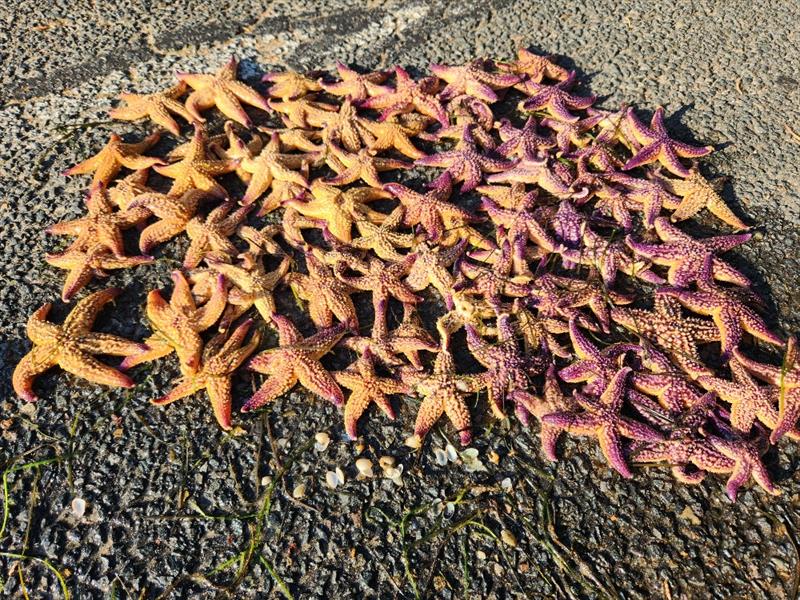
Northern Pacific seastar is a huge starfish (up to 50cm in diameter) - it is an eating machine and its favourite food includes mussels, clams, scallops and other shellfish © Julianne Stuart, Australia

Asterias amurensis, or the Northern Pacific seastar is a huge starfish (up to 50cm in diameter) that is described by the Ministry for Primary Industries as an eating machine and its favourite food includes mussels, clams, scallops and other shellfish.

The Northern Pacific seastar has 5-pointed arms with upturned tips and yellow and purple markings. It is a species that can travel undetected on boat hulls or in ballast water. It grows up to 24cm across but can reach 50cm.

It often groups together in large numbers.

In short, it could decimate our native biodiversity. It is one of five species focused on by the National Marine High Risk Site Surveillance program and the good news is that it’s not been detected in New Zealand yet - but its impact should it ever make it here, would almost certainly be devastating, as it has been in locations where it’s established in Tasmania and Victoria.

One community group in Hobart estimates it has removed more than 200,000 sea stars from its local waters, and another group in Victoria removed more than 60,000 specimens of this invasive pest between February and June this year.

If you see something that looks like a Northern Pacific seastar, please take a photo or collect a sample, record the location and report it urgently to the Ministry for Primary Industries 0800 80 99 66 or via the online form at Biosecurity New Zealand // Online Notifications (mpi.govt.nz)

Related Articles

All eyes on the water for summer 2025
New Zealand's sailing fleet is in a great position to find and report marine pests this summer New Zealand's sailing fleet is in a great position to find and report marine pests this summer, as Clean Below? Good to Go launches its ‘all eyes on the water' campaign to help boat owners and ocean lovers understand what marine pests look like. Posted on 5 Nov
Exotic caulerpa in Paradise Bay at Urupukapuka
A cruiser was surprised when he pulled up a substantial amount of exotic caulerpa A cruiser was surprised - and worried - when he pulled up a substantial amount of seaweed that looked like it could be exotic caulerpa in Paradise Bay at Urupukapuka. Posted on 16 Apr
‘Hull grooming' - a new mindset
If your boat lives full time in the water, you might have heard the term ‘hull grooming' If your boat lives full time in the water, you might have heard the term ‘hull grooming' - an approach that's catching on within the maritime community. Posted on 4 Feb
Summer marine biosecurity guide for boatowners
Hull hygiene, boat performance and marine biosecurity rules: an updated guide for Kiwi boat owners Making sure your boat is clean before travelling from place to place isn't always easy, but it's important. Posted on 27 Dec 2024
How to report marine pest sightings
As fantastic as our surveillance teams are, they can't get around it all. They need your help! From Northland all the way down to Hawke's Bay, our regions include a vast amount of coastline. As fantastic as our surveillance teams are, they can't get around it all. They need your help! Posted on 3 Dec 2024
Check the rules before summer boating starts
Marine biosecurity teams are reminding boaties and all marine users to make sure they are across mar Marine biosecurity teams are reminding boaties and all marine users to make sure they are across marine pest risks and rules before heading out on the water this summer. Posted on 24 Sep 2024
Clean Below - All Eyes 1456x180 BOTTOM